

The Senate on Thursday granted yet another extension for the implementation of the capital component of the 2025 Appropriation Act, shifting the deadline from June 30 to September 30, 2026, as billions of naira tied to the budget remain unspent across Ministries, Departments and Agencies (MDAs).
The decision, taken after a closed-door executive session, effectively gives the 2025 budget a fresh lifeline amid growing concerns over slow execution and recurring delays in project delivery.
Senate Chief Whip Tahir Monguno, who moved the motion, told lawmakers that a significant portion of funds already released for capital projects had not been utilized due to procurement delays, administrative bottlenecks, and implementation challenges.
He warned that without an extension, several ongoing projects risk abandonment, while already committed public funds could go to waste.
However, the latest extension further highlights a recurring pattern in Nigeria’s budgeting system, where unspent allocations are routinely carried over well beyond their original fiscal timeline.
Chairman of the Senate Committee on Appropriations, Senator Solomon Olamilekan Adeola, acknowledged that implementation targets tied to the 2025 budget were not fully achieved, forcing repeated adjustments to the budget’s lifespan.
He noted that when the 2025 budget was presented, there was an expectation that a significant portion would be implemented within the first phase of the fiscal cycle, with remaining obligations rolled into the next budget. That timeline, however, was not met.
According to him, this failure led first to an extension of the budget to June 30, 2026, and now a further extension to September 30, 2026.
Senator Victor Umeh supported the motion, stressing the need to sustain ongoing projects captured under the budget rather than allow them to stall due to expired timelines.
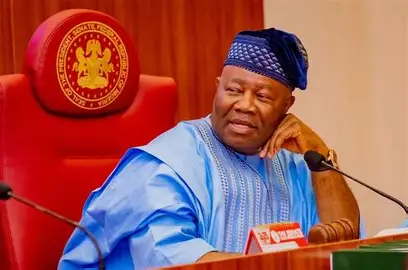
Following a voice vote, Senate President Godswill Akpabio declared the extension approved, noting that payments would have been disrupted without the decision.
“The payment would have stopped halfway if this was not done,” he said, directing that the resolution be transmitted to the Executive for implementation.
The extension means the 2025 budget—originally designed as a one-year fiscal plan—will now run deep into 2026, as government continues to grapple with slow capital project execution and a growing backlog of unspent funds.
While lawmakers argue that the move is necessary to protect ongoing projects and ensure value for money, it also reinforces concerns about the increasing normalization of budget carryovers in Nigeria’s public finance system.
For many observers, the repeated extensions raise a pressing question: whether annual budgets are still time-bound financial plans, or increasingly flexible frameworks that stretch far beyond their intended fiscal cycle. :::