
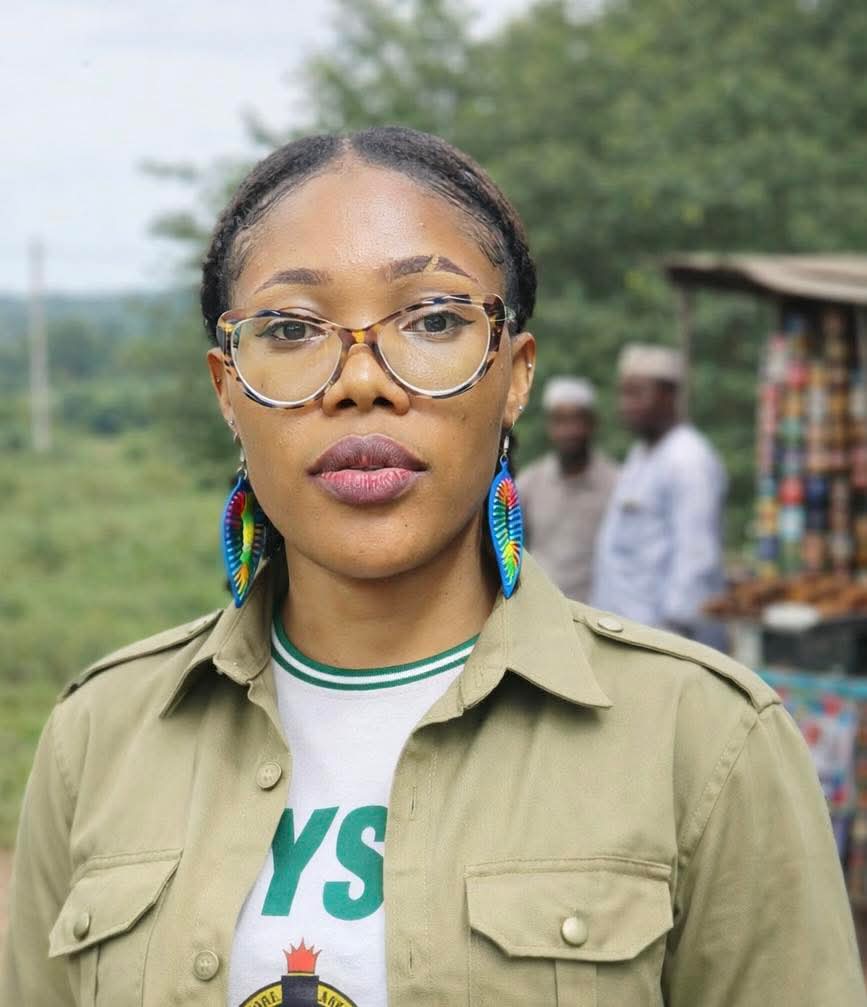

When Uche left her home in the South for Kebbi State as part of her National Youth Service Corps (NYSC) year, she braced herself for a culture shock. “The weather was harsh, the dry air and coughing in public vehicles almost made me throw up,” she recalls. Yet, it wasn’t the climate that left the deepest impression—it was the people.
Her mother had secretly packed two hijabs into her luggage. “At first, I didn’t understand why,” Uche laughs. “But I soon realized that in the North, some Christians wore hijabs too—not for religion, but as part of the culture. Wearing them helped me feel part of the community.”
At first, communication was a challenge. Uche would wander from Chikingari to Kalgo bus stop to spend time at Mohammed’s shop, fumbling with the few Hausa words she knew. “He smiled patiently while I babbled in Turanci,” she says, grinning. Over time, her effort to learn the language and adapt to local customs earned her the trust and warmth of the community.
Her colleagues at the Primary Education Authority (PEA) noticed her character, too. “They saw I didn’t discriminate. They even helped me find paid accommodation away from the crowded corpers’ lodge,” she recalls. During Ramadan, she would remind her neighbors of prayer times, and in return, they shared kosai and dankali with her, always saving a portion for their Christian guest.
Even teenage girls at the station, who initially teased her by calling her “Anti,” eventually gifted her a full hijab that covered her from head to toe. “Of course I wore it! I felt loved,” Uche says, laughing. The warmth extended to local leaders. A ruler’s wife invited her to her inner chamber after hearing of Uche’s kindness and promised that her door would always be open whenever Uche returned.
Reflecting on her NYSC year, Uche contrasts the acceptance she experienced in Kebbi with the tribal backlash she faced years ago over a romantic relationship. “People questioned why I would even consider a Yoruba man because I am Igbo,” she says. “But my time in Kebbi taught me that love, respect, and understanding are far bigger than tribe or religion.”
Uche’s story is a reminder that unity often begins with simple acts of kindness and openness. Across cultural divides, it’s empathy and genuine human connection that leave the most lasting impression.
Her Original narration on facebook:
I served in the North, Kebbi State to be precise. And I can boldly say I never, I repeat never, received half the insults I got yesterday from the Northerners. In my last post, I shared how I wanted to marry a Yoruba man 5years ago, but his mother refused because I am ‘Omo Ibo’. Some Yorubas reacted too, but the reactions from many of my fellow Igbos made me shake my head. It showed me how deeply tribalism has eaten into the fabric of unity in Nigeria.
Before I, Uche, left for ‘ugwu Hausa’, my mum quietly packed two hijabs inside my luggage. When I got to Kebbi, it was not easy at first. The weather was harsh. The dry air, the coughing from natives, especially in public vehicles almost would make me throw up, like everything felt strange. But I knew I would be there for a year, so I decided to blend. I stopped feeling irritated, stopped complaining, got me some nose-masks to help with journeys.

Sometimes I would walk out of Chikingari to sit at Mohammed’s shop at Kalgo bus stop, where he sold minerals, ‘kankara’ and ‘suya’. We would gist, but he smiled most of the time, for lack of understanding my ‘Turanci’, and I would carry on speaking in the nonsense 😂trying out the small Hausa words I was learning. I began using my short hijabs. I realized that in the North, some Christians like Muslims wore hijabs, not about religion.
Even at my PPA, they observed my character and how I didn’t discriminate. Before long, the same Hausa people helped arrange paid accommodation for me away from the corpers’ lodge at Gidan Kofa, a place mainly for those teaching in the government ‘makaranta’.
During fasting periods like this, I would even remind them when it was time for prayers. They would wonder what kind of human being I am, after laughing out loud. They knew I am a Christian, yet when they shared ‘kosai’ and maybe ‘dankali’ after breaking fast, they always sent my own to the office.
Some teenage girls came to the station giggling and calling me “Anti”, because that was about all they knew in Turanci. And jointly gifted me a full hijab, one that covered me from head to toe😀 I wore it! You think I wouldn’t? Tah😂 I was loved there. The love of God exuded from me, to light up every life that came my way. At some point, a ruler’s wife sent for me in Birnin Kebbi. She is ‘hajia’ so I was led to her inner room where I saw her face. She told me she had heard good things about me and made me promise that whenever I return to Kebbi, I must come and see her. That door of relationship is open for life.
So when I now see people reacting with tribal sentiment over a relationship heartbreak from five years ago and asking why I would even consider a Yoruba man, it really disappointed me. May tribe and religion never be the end of us in this country.
I rest my pen.
With ❤️
@nwayiocha1 #mystory #relationships #NYSC #northernnigeria #marriagematters #tribe #ineversee #nwayiocha1 #newsong