
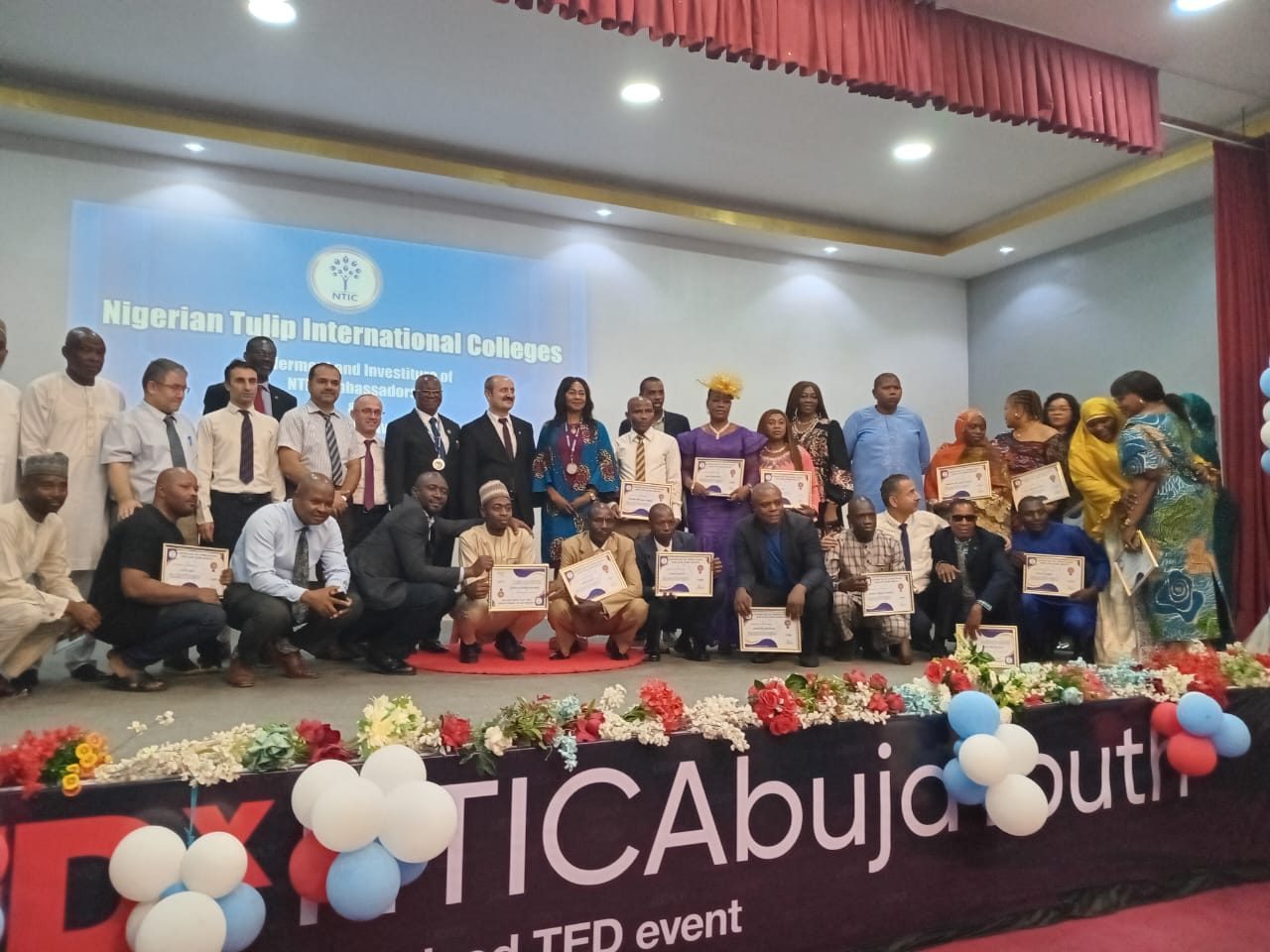


As Nigeria grapples with worsening insecurity that has shuttered schools, disrupted communities and stoked fear across states, two prominent figures — former Olympian Mary Onyali and retired Air Commodore Darlington Egbunu Abdullahi — are urging a strategic shift in national response that places education at the heart of social resilience and national renewal.
Their message, delivered at the 2026 Nigerian Tulip International Colleges (NTIC) ambassadorial ceremony in Abuja, reframes the role of education from a narrow classroom function to a defensive shield against Nigeria’s multi-layered insecurity crisis — a crisis that, according to security data and regional advocacy groups, has already devastated livelihoods and forced school closures in vulnerable areas.
“We cannot all quit going to school because of insecurity,” Onyali told governors and education leaders, urging more decisive leadership to protect learning environments rather than accept closures as the default response. “If help is needed, leaders should ask for it.”
Her remarks echo growing public concerns over the disruption of education in regions affected by violence. In parts of northern and central Nigeria, escalating attacks by criminals and armed groups have forced repeated school closures, leaving children out of classrooms and vulnerable to exploitation.
For Onyali — a decorated athlete now using her platform for social advocacy — the crisis is more than political; it is deeply human. She linked insecurity’s impact on children’s education with broader social consequences, arguing that schools are not just institutions of learning but pillars of social stability.
“The longer children stay out of school, the greater the risks of crime, radicalisation and social exclusion,” she said, highlighting the school’s role in not only teaching facts but grounding young Nigerians in discipline and opportunity.
Abdullahi, a security scholar and former Air Force officer, reinforced this view from a national security perspective. With a PhD in Security and Strategic Studies, he emphasised that education contributes to societal resilience, helping young people understand their roles and stay clear of criminal networks.
“If you deny a child education today, you may be creating a problem for society tomorrow,” Abdullahi warned. His comments reflect broader concerns among civil society and communal organisations that insecurity is eroding public confidence and weakening the country’s social foundation.
This argument aligns with recent appeals by regional and cultural groups calling for a united approach to insecurity, where communities, governments and professionals work hand in hand. The Yoruba Council of Elders and other civic bodies have emphasised that security cannot be left to the government alone, urging collective citizen engagement and proactive measures to protect schools, homes and markets.
At the same time, a recent security database report spotlighting thousands of deaths and abductions in 2025 underscores the urgency of this call for action. Analysts have pointed to rising kidnappings, banditry and communal clashes as key factors driving school closures and economic disruption.
Onyali and Abdullahi’s advocacy adds a human capital lens to the debate: that education is not merely an economic good but a security imperative. By linking the reopening and protection of schools to long-term stability, they have recast the narrative from fear and withdrawal to investment and prevention.
Their positions also reflect a broader push within Nigerian society to transform how insecurity is addressed — from reactive, militarised responses to holistic, community-oriented strategies that integrate education, economic opportunity, and civic empowerment.
For Onyali, the appointment as an NTIC ambassador is not an honorary title but a platform to connect institutional learning with national purpose. For Abdullahi, it underscores the belief that strategic knowledge and disciplined training can help break cycles of violence that have kept Nigeria’s youth on edge.
Their voices are part of a growing chorus urging Nigerians to see education as a frontline defence — not just a right, but a strategic investment in peace, security and shared prosperity.