
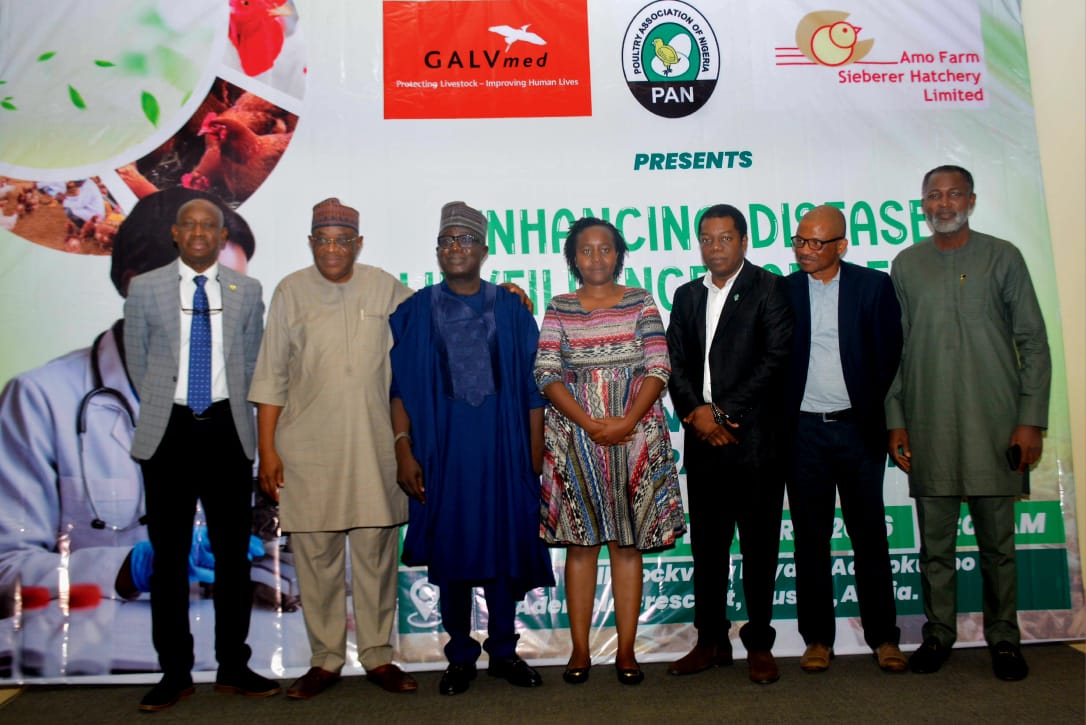

The Federal Government has reaffirmed its commitment to building a modern, integrated and responsive poultry disease surveillance system aimed at protecting farmers, safeguarding the national food system and strengthening the economy.
The Chief Veterinary Officer of Nigeria, Dr Anzaku Samuel, stated this in Abuja at the opening of a one-day training programme for 100 selected poultry farmers from across the federation and the Federal Capital Territory (FCT). The training focused on strengthening private-sector poultry laboratories in Nigeria.
Dr Anzaku said the current administration has intensified sensitisation efforts among farmers after recognising that disease remains the single greatest threat to the poultry industry.
He noted that effective disease surveillance is critical to preventing outbreaks that negatively affect productivity, feed efficiency, egg production, trade confidence and consumer safety.
According to him, early detection and rapid response are essential to sustaining the sector, stressing that collaboration between government institutions and private poultry laboratories must be strengthened to improve diagnostic turnaround time.
“Farmers need to receive laboratory results quickly enough to make timely management decisions.
That can only happen if we build strong partnerships between veterinarians, diagnostic laboratories and producers,” he said.
Dr Anzaku also urged participants to standardise reporting pathways to ensure seamless information flow across the poultry value chain. He explained that efficient communication would make disease surveillance more proactive rather than reactive.
He commended the Global Alliance for Livestock Veterinary Medicine (GALVmed) for organising the training, describing it as a major step toward strengthening Nigeria’s animal health system.
In his remarks, the Country Manager of GALVmed, Dr Moses Arokoyo, said the training was designed to promote a diagnostic and preventive approach to disease management as a pathway to improved productivity and profitability among poultry farmers.
Dr Arokoyo emphasised the importance of collaboration, noting that much of the data required for effective sector planning resides with poultry farmers. He said closer cooperation would enable government agencies to generate accurate data and make informed policy decisions.
He, however, appealed to the Federal Government to ease import regulations and invest more in building the capacity of farmers in rural areas to enhance productivity nationwide.
Also speaking, the Director-General of the Poultry Association of Nigeria (PAN), Mr Onalo Akpa, identified high production costs as one of the major challenges confronting poultry farmers. He urged the government to engage professionals across the livestock and crop sectors to ensure a balance between raw material producers and livestock farmers.
According to Akpa, heavy reliance on imported raw materials has continued to drive up production costs, with negative implications for the broader economy.
The training provided a platform for farmers and other stakeholders in the livestock sector to exchange ideas and address challenges hindering the growth and sustainability of poultry production in Nigeria.