
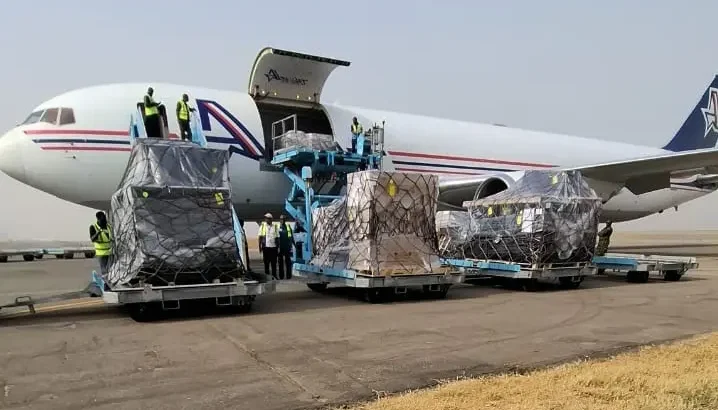


The delivery of military supplies by the United States to Nigeria is emerging as more than a routine defence transaction—it is a strong signal of renewed international confidence in Nigeria’s evolving security strategy and leadership coordination.
Confirmed by the United States Africa Command (AFRICOM), the delivery underscores Washington’s willingness to back Nigeria’s efforts to confront terrorism and violent extremism at a time when security threats remain complex and multi-dimensional.
“U.S. forces delivered critical military supplies to our Nigerian partners in Abuja,” AFRICOM said, describing the move as part of a shared commitment to collective security.
Beyond the hardware, analysts say the support reflects growing trust in Nigeria’s restructured security coordination, led by the Office of the National Security Adviser and reinforced by tighter inter-agency collaboration involving the military, police, and intelligence services.
The delivery follows months of intensified diplomatic engagement between Abuja and Washington. In November, a high-powered Nigerian delegation led by National Security Adviser Nuhu Ribadu held extensive talks with U.S. officials across key institutions, including the White House, Congress, the State Department, and the Department of Defense.
Those engagements, according to officials, were pivotal in reframing global perceptions of Nigeria’s security challenges, particularly allegations of religiously motivated violence. Nigerian officials stressed that terrorism and violent attacks cut across ethnic and religious lines, affecting communities nationwide.
Presidential spokesman Bayo Onanuga said the discussions helped correct misconceptions, rebuild confidence, and lay the groundwork for a more pragmatic, solution-oriented partnership.
Importantly, both countries agreed to move beyond ad-hoc cooperation by establishing a Joint Working Group and a non-binding cooperation framework—steps designed to ensure continuity, accountability, and coordination in security assistance.
The United States also indicated readiness to complement military support with humanitarian assistance and technical backing for early-warning systems, especially in the Middle Belt, where civilian protection remains a priority.
For Nigeria, the development highlights a broader shift toward blending military action with intelligence sharing, civilian protection, and international diplomacy. Security experts argue that sustained foreign support will now depend on how effectively Nigeria translates these partnerships into measurable improvements on the ground.
As security agencies continue operations nationwide, the U.S. delivery is being viewed as both a boost to operational capacity and a diplomatic endorsement—one that places renewed expectations on Nigeria to consolidate gains, protect civilians, and sustain reforms within its security sector.