


Nigeria’s drive to attract billions of naira in solid minerals investments is being threatened by insecurity along mining corridors and regulatory conflicts between federal and subnational authorities, industry stakeholders have warned.
The warning exposes a major challenge confronting the country’s ambition to turn its mineral wealth into jobs, foreign investment and industrial growth, even as commercial gold production demonstrates the sector’s potential.
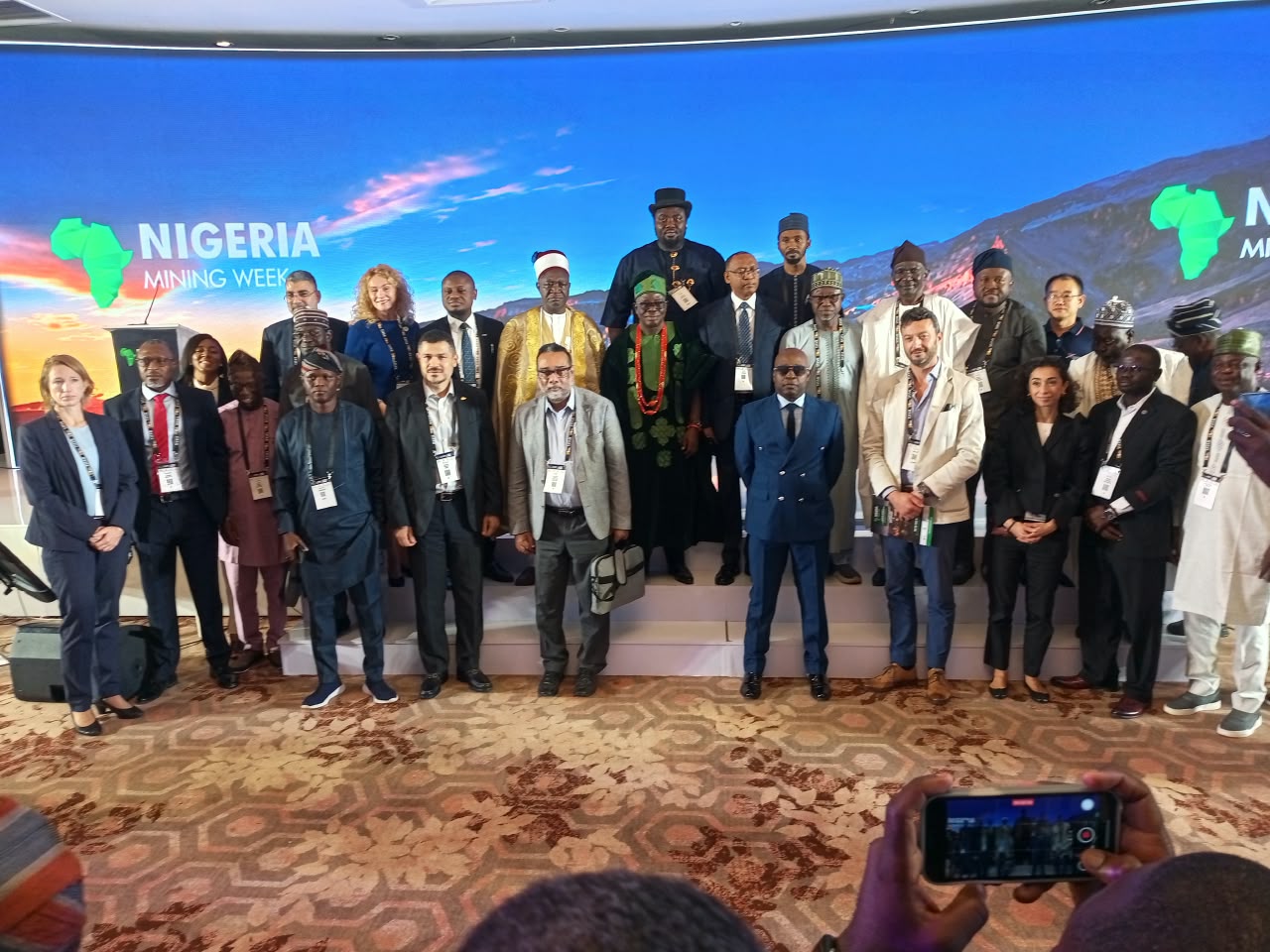
At the opening of the 11th Nigeria Mining Week in Abuja, President of the Miners Association of Nigeria, Oba Ayandele Ayanleke, identified insecurity and disagreements over regulatory responsibilities as major obstacles to developing the industry.

He said investors needed clearer rules and stronger coordination among government authorities to operate confidently in Nigeria’s mining sector.
Ayanleke called for stronger partnerships among local and international stakeholders, noting that cooperation would encourage technology transfer, investment and the exchange of expertise.
His warning comes as industry operators seek to expand commercial mining while grappling with illegal extraction, inadequate infrastructure and limited access to financing.
Country Manager of Segilola Resources Operating Limited, Austin Menegbo, said Nigeria must build on the performance of its first large-scale commercial gold mine to establish a more competitive mining industry.
Menegbo disclosed that Segilola produced 91,910 ounces of gold in 2025, with Nigerians accounting for 99 per cent of its workforce.
He said the operation demonstrated that responsible investment, technical expertise, effective regulation and engagement with host communities could support globally competitive mining activities in Nigeria.
However, he identified regulatory uncertainty, poor coordination among government agencies, illegal mining, insecurity, infrastructure constraints and limited access to finance as challenges that could discourage further investment.
Menegbo urged authorities to establish coordinated approval processes and predictable regulatory timelines to reduce uncertainty for investors.

He also called for stronger engagement among government agencies, mining companies, investors, host communities and civil society.
Beyond attracting large-scale investors, the Segilola executive said Nigeria must also address the challenges facing artisanal and small-scale miners.
He advocated safety training, technical support, access to finance and cooperative structures to bring more small-scale operators into the formal mining economy.
Meanwhile, Sweden has offered to deepen cooperation with Nigeria in mining technology, automation, skills development and responsible mineral production.
Head of Mission of the Swedish Embassy in Nigeria, Ambassador Anna Westerholm, said partnerships should prioritise local processing, workers’ safety, community welfare and transparency.
She also highlighted mineral traceability as an increasingly important requirement in international markets, noting that the ability to establish where minerals originate and how they are extracted could strengthen Nigeria’s competitiveness.
Partner and Mining Industry Leader at PwC Nigeria, Cyril Azobu, similarly called for the conversion of Nigeria’s mineral potential and growing international interest into bankable projects.
Azobu said the country needed a predictable investment environment and stronger partnerships to connect domestic opportunities with international capital, technology and expertise.
He also urged Nigeria to move beyond exporting raw minerals by investing in domestic processing and value addition.
The 11th Nigeria Mining Week is being held in Abuja under the theme, “Unlocking Investment and Growth through Partnerships.”
The discussions highlight a central challenge for Nigeria’s mining industry: attracting investors will require not only showcasing mineral deposits but also addressing security risks, regulatory uncertainty and the conditions that determine whether mining projects can operate sustainably.