

As political parties step up mobilisation for the 2027 elections, an activist, Prince Babawale Sayo, has warned that politicians using the language of guns, war and violence could frighten Nigerians away from the ballot box.
Sayo said inflammatory political rhetoric could revive memories of election-related violence and make citizens see polling units as danger zones rather than places to exercise their democratic rights.
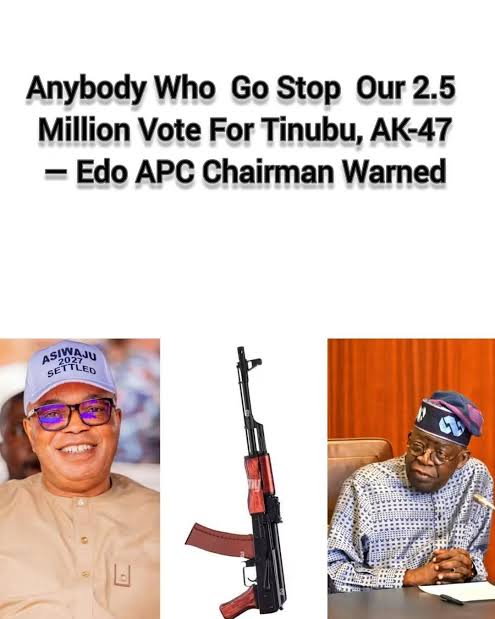
He spoke on The Policy Room, anchored by Lemmy Ughegbe, while reacting to controversial remarks attributed to political actors, including the recent reference to “AK-47 fire” by the Edo State Chairman of the All Progressives Congress, Jarrett Tenebe.

Tenebe had spoken of the party’s plan to secure 2.5 million votes for President Bola Tinubu in Edo State. His comment sparked demands for investigation from the African Democratic Congress, while a coalition of civil society groups defended him, arguing that the remark was taken out of context and related to prayer rather than a call for violence.
Sayo, however, said the controversy should not be judged only by the speaker’s subsequent explanation.
According to him, once firearms and violent imagery enter political discourse, they can create fear among voters regardless of the intention behind the statement.
He also cited remarks by Osun East Senator Francis Fadahunsi during the state governorship election, which were interpreted by some as a call for violence against members of the opposition Accord Party.
Fadahunsi later explained that he was referring to defeating his opponents through votes.
Sayo said such clarifications could come too late because the initial remarks may already have shaped public perception.
He recalled growing up with warnings from his parents to remain indoors whenever elections approached because of fears of violence.
“That is why when you look at total registration of voters vis-a-vis people that come out to vote, the percentage is highly discouraging,” he said.
The activist argued that repeatedly describing elections as battles or wars could deepen public anxiety and discourage eligible voters from turning out.
He said the responsibility should not rest on voters alone, urging political parties to control the language used by their officials and supporters.
Sayo also called for greater vigilance by the police, the National Human Rights Commission and the Independent National Electoral Commission in dealing with inflammatory political conduct.
He warned that failure to sanction dangerous rhetoric could encourage politicians to continue testing the limits of acceptable campaign language.
“If you have done enough deterrent, then it will have reduced or most probably it wouldn’t come up again,” he said.
Sayo questioned the growing use of firearm imagery in political mobilisation, asking when weapons such as the AK-47 became associated with the ballot.
He urged politicians seeking public office to recognise the influence their words can have on supporters and the wider electoral atmosphere.
The activist also invoked former President Goodluck Jonathan’s declaration that his political ambition was not worth the blood of any Nigerian as an example of the standard political leaders should uphold.
“Why don’t we learn from the golden statement of former President of Nigeria, Goodluck Jonathan, that said my ambition is not worth the blood of any Nigerian?” he asked.
Sayo, however, urged Nigerians not to abandon the electoral process because of provocative statements.
“Do not be deterred with whatever comment anybody is saying,” he said.
With the 2027 elections approaching, he said political leaders, security agencies and voters all had a role to play in ensuring that fear and violent rhetoric do not drive citizens away from the ballot box.