

By Douglas Baye-Osagie
dbayeosagie@yahoo.com
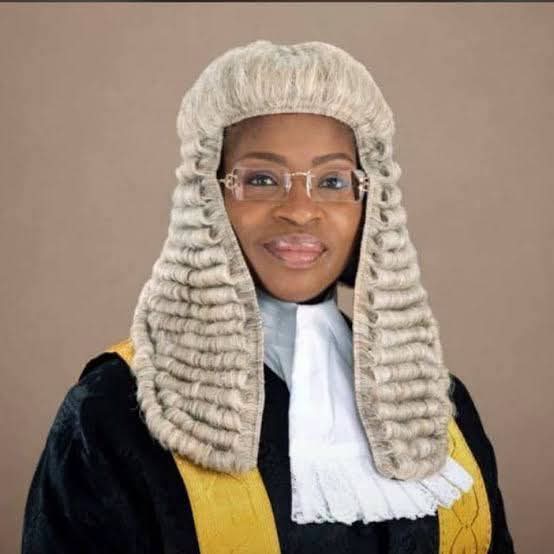
The 66th Nigerian Bar Association Annual General Conference in Port Harcourt, Rivers State, will be remembered for many things. Not just the swearing in of the first elected female President of the Bar, Mrs. Oyinkansola Badejo-Okusanya, SAN, but also the quality of some invited guests. The outgoing exco did not serve the reputation of the NBA well with the choice of invitees. One scene will linger longer than the communiqués and cocktail conversations: the invitation of a popular and controversial social media influencer, Martins Vincent Otse, popularly called “VeryDarkMan” or VDM, to a panel session titled “Known Gunmen or Unknown Gunmen” to discuss matters of security.
For a body of lawyers, whose calling is order, facts, due process, and the rule of law, hosting VDM was both jarring and instructive. It signaled that the conversation about justice in Nigeria has moved beyond the courtrooms and into phones, livestreams, and comment sections. Like the slogan of this year’s conference was “Beyond Limits,” this was certainly “beyond” some of our expectations.

Human rights lawyer and activist _Dele Farotimi_ captured the discomfort many felt when he said: _“A society that has a functional police system and court will not tolerate the presence of VeryDarkMan.”_ The quote went viral within minutes.
I would, however, frame it differently: _A society with a functional police system and an effective court will not create the kind of vacuum that invites the emergence of figures like Mr. VeryDarkMan._ The problem is not only the man. He has boldly amplified crimes and helped a lot of persons through his unconventional manner get results. The problem is the gap he walked into.
Institutions exist to prevent vacuums. When they work, citizens do not need to look elsewhere. When they are slow, opaque, or perceived as compromised, people will seek alternative avenues for the justice they need. That is basic sociology, not an endorsement.
VDM did not emerge from nowhere. He emerged because countless Nigerians posted evidence of extortion, of missing case files, of bail that never comes, and got no response — until a video went up. In that moment, he became an informal and flawed arm of accountability.
That is not an argument for mob justice. It is an explanation. As long as the formal three arms of government are perceived to be dysfunctional in parts, more figures like him will keep emerging. You cannot hate the symptom and ignore the disease.
But when he took the microphone to speak, it was a blanket generalization of conclusions without recourse to facts and data. We understand that there are some bad eggs in the security institutions of the government, but nothing was spared in taking all of them to the cleaners. Activism, even necessary activism, does not give anyone the right to discountenance the sacrifices of men and women in uniform who put their lives on the line daily to protect others.
No human system is perfect. The police and military are not monoliths. To say “the same security institution is causing insecurity” is a lazy generalization that erases both the good and the complex. Why should the NBA lower itself by inviting rabble-rousers to address its august gathering? This is a new low. After the conference, Mr. Martins, in character, replied to those lawyers who deemed him unfit to speak to them, calling them mostly bedsheet sellers. In his words, “This bunch of clowns are telling me that law is a noble profession. Well, lately law has not been a noble profession. Law is one of the most broke professions. One of the poorest professions in this country is law. Four thousand have graduated from law school only to end up selling bedsheets.”
This was a hot slap in the face of the NBA for not being discreet in granting a platform to an emotionally charged personality.
We must speak with facts. Data, not vibes. Between June 2023 and December 2025, Dataphyte’s review recorded that 365 police officers were killed in the line of duty. SBM Intelligence tracked 242 police officers slain by non-state actors in 255 separate incidents within 2023-2025.
In the last one year alone, at least 45 police officers were killed in attacks on stations, checkpoints, and patrol teams across Borno, Kwara, Enugu, Kano, Zamfara, Plateau, Benue, and other states. In August 2025, NOA reported 16 officers killed in one month, even as police operations led to 78 suspected terrorists killed and 175 kidnap victims rescued.
In the FCT, the Commissioner of Police, Tunji Disu, at the time before his elevation to Inspector-General of Police, disclosed that about 140 officers were lost in 2025 to violent attacks, accidents, and duty-related incidents. These are not statistics. They are fathers, mothers, and children who did not come home.
The military toll is just as sobering. In the first six weeks of 2025, the Nigeria Security Tracker recorded 28 soldiers killed. Between September 2025 and August 2026, at least 11 officers from the Police and Military were killed in five separate ambushes where attackers carted away service weapons. The latest was a Police Inspector and an Air Force Corporal killed in Riyom, Plateau, in August 2026.
That is the other side of the story we rarely amplify. An institution that is bleeding cannot simultaneously be dismissed wholesale as the problem. Both things can be true at once. We also fail to see that these institutions self-regulate through the internal discipline of erring officers.
A report released in July 2026 by the Police Service Commission says that 4 very senior officers were dismissed and 31 others sanctioned for various acts of misconduct. Ten officers were demoted. Among them, three Superintendents of Police were reduced to the rank of Deputy Superintendent, two Deputy Superintendents were demoted to Assistant Superintendent, while five Assistant Superintendents were reduced to the rank of Inspector. Two officers were compulsorily retired in the public interest. The Commission said the disciplinary actions reflect its determination to promote accountability, professionalism, and public confidence in the Nigeria Police Force. And just within the intelligence community, the Economic and Financial Crimes Commission Chairman, Mr. Ola Olukoyede, said in August 2026 that more than 40 members of its personnel have been dismissed over alleged corruption and financial malpractice in the past two and a half years.
First, there are rotten apples. Cases of police renting out guns, extortion at checkpoints, and desertion are investigated and prosecuted. This shows that there are internal audits which serve to give public confidence rather than tear down the institution. The same applies to the Army, where the court-martial system tries and disciplines officers from the lowest to the highest ranks.
Education demands nuance. If five ladies from one ethnic group are caught in a crime, it does not make every woman from that group a criminal. If a handful of officers are corrupt, it does not make the entire Police and Armed Forces the cause of insecurity. The NBA conference is not a pepper soup joint where we trade in sweeping statements.
On this, I am reminded of words from outside our shores that still apply here. Retired US General Colin Powell once said: _“The Army is not a democracy. You are not serving for yourself. You’re serving for the men next to you, the people you’re protecting, and the country.”_ Respect for that sacrifice should be the baseline of any national conversation.
Former US President Ronald Reagan also put it plainly: _“Freedom is never more than one generation away from extinction. We didn’t pass it to our children in the bloodstream. It must be fought for, protected, and handed on.”_ In Nigeria, that fight is being fought in Sambisa, in Benue, in Zamfara, and on the streets of Port Harcourt by the same officers we debate.
So where do we go from here? We praise the courageous men and women at the frontline. We demand accountability from the brass. We reject narratives that paint all security personnel as the problem. And we fix the vacuum — with faster courts, functional police reform, witness protection, and a culture where justice does not require going viral.
Madam President should roll up her sleeves and activate a working relationship with the Nigeria Police Force, the National Assembly and the National Judicial Council. The police are the first in line in crime detection and prosecution. A system that fully implements the Police Act 2020 and the Administration of Criminal Justice Act 2015 will ensure prompt investigation, diligent prosecution, and public confidence in reporting crime. The constitutional review Committees of the National Assembly should be engaged to prioritize amendments to key judiciary reforms in the Constitution. The offices of the Deputy Senate President and the Deputy Speaker of the House of Representatives are institutional warehouses for the process. And what that means is working to present draft bills for the 11th Assembly which will be inaugurated in June 2027, as the current Assembly is already in election mood and may lack the bandwidth for detailed legislative work. The NBA should also partner with the National Judicial Council to drive judicial case management reforms for speedy trials, and work with state judiciaries to expand court-annexed arbitration and mediation under the Arbitration and Mediation Act 2023.
If we do that, the next NBA conference will not need a VeryDarkMan on stage. Not because we silenced him, but because we are intentionally building a system where he is no longer necessary.
_Let’s keep pushing for facts, welfare, and justice — for both citizens and officers._