


By Friday Idachaba

The Director-General of the Broadcasting Corporation of Abia State (BCA), Apostle Francis Nwubani, has urged journalists to put the safety, dignity and privacy of children ahead of sensationalism when reporting issues involving them.
Nwubani gave the warning in Port Harcourt, Rivers State, at a zonal workshop on the ethical reporting of children organised by BCA in partnership with UNICEF’s Enugu Field Office.
He said children are among the most vulnerable members of society and require special protection from the media and other institutions.
According to him, revealing a child’s identity, using harmful language, conducting intrusive interviews or publishing sensational reports could expose children who have suffered abuse, violence, conflict, exploitation or displacement to further trauma.
Nwubani said journalists have significant influence through their reports, headlines, broadcasts, documentaries and digital platforms.
He therefore described responsible reporting of children as both a professional and moral responsibility.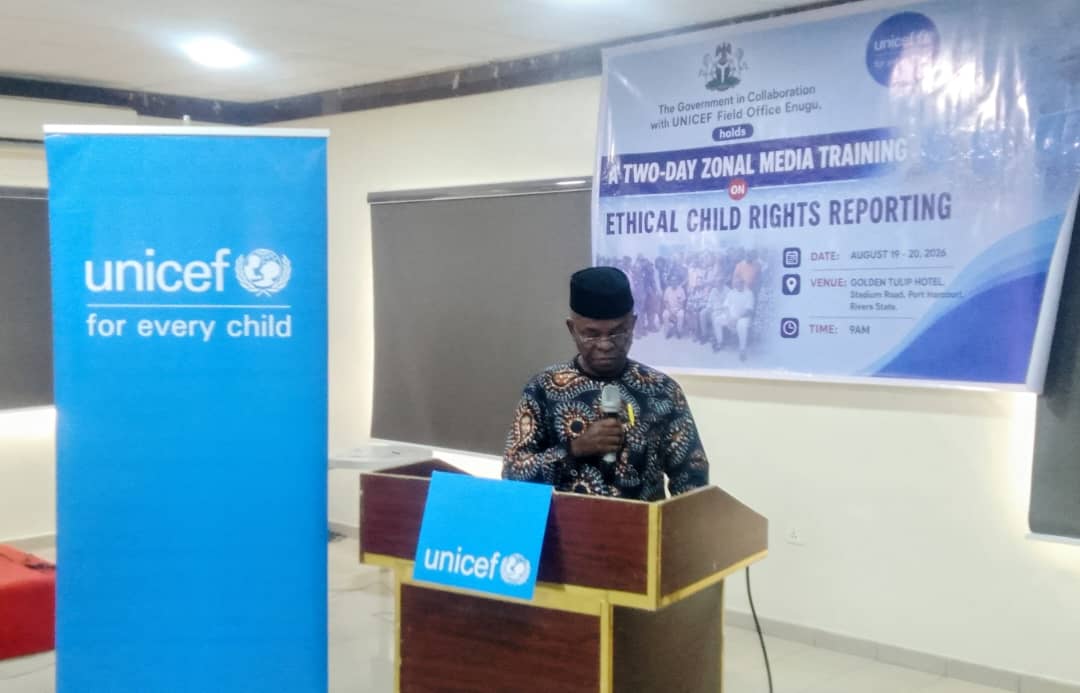
“Ethical reporting of children is not merely a professional requirement; it is a moral obligation,” he said.
The BCA boss said the workshop brought together journalists, editors and state correspondents from nine states, including Abia, Imo, Anambra, Enugu, Rivers, Cross River, Benue, Delta and Kogi.
He urged participants to pay close attention to issues such as protecting children’s identities, obtaining proper consent, avoiding stereotypes, using child-friendly language and conducting interviews carefully.
Nwubani also asked journalists to consider the possible consequences of their reports before publishing stories involving children.
He said reporters should ask whether a story would protect or expose the child, respect the child’s privacy and dignity, serve the child’s best interest and give the child a voice without causing further harm.
However, he stressed that ethical reporting does not mean avoiding difficult stories involving children.
Rather, he said such stories should be reported accurately and sensitively, with the aim of promoting justice, solutions and the protection of children’s rights.
Nwubani also noted that the media has an important role in exposing abuse, holding institutions accountable and drawing attention to policies that affect children.
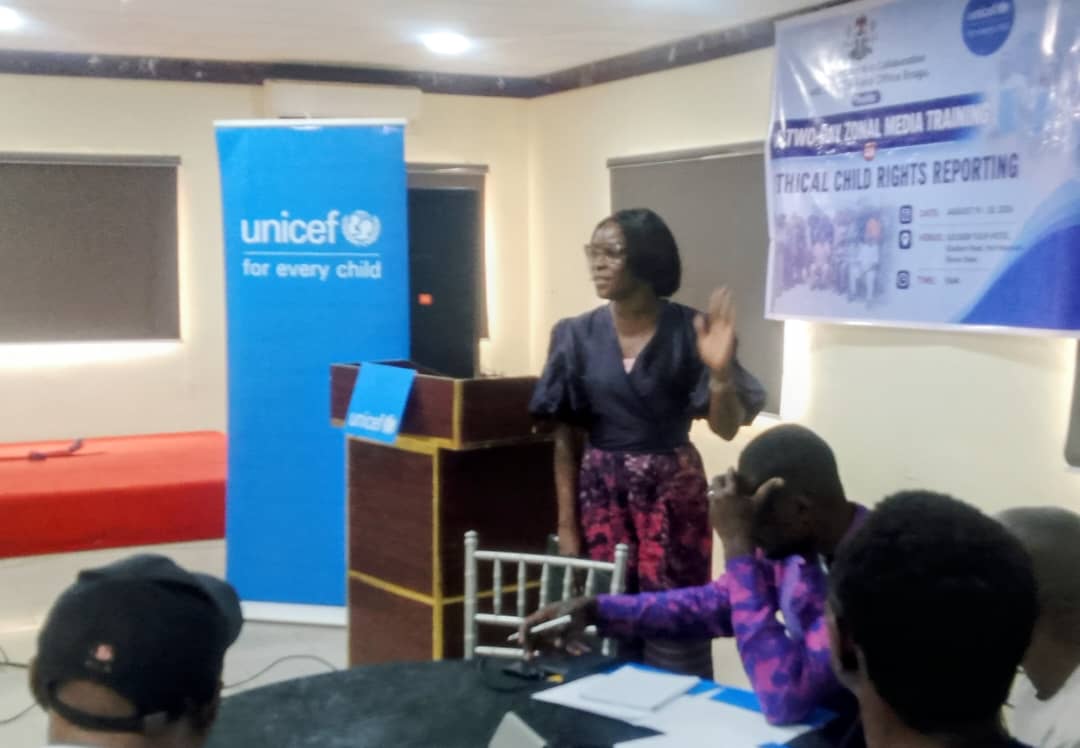
In her keynote address, titled “Why Ethical Reporting of Children Matters in Nigeria,” UNICEF Nigeria Communications Specialist, Sussan Akila, also urged journalists to handle stories involving children with care.
Akila said careless reporting, particularly in cases of sexual abuse and serious assault, could expose victims to stigma and long-term emotional harm.
She urged journalists to focus on justice while protecting the identity, dignity and emotional well-being of affected children.
Akila warned that children who are publicly stigmatised may face serious social and psychological consequences.
She said responsible journalism should help protect vulnerable children rather than expose them to further harm.
The workshop was aimed at strengthening the capacity of journalists to practise child-sensitive and rights-based reporting across the participating states.