
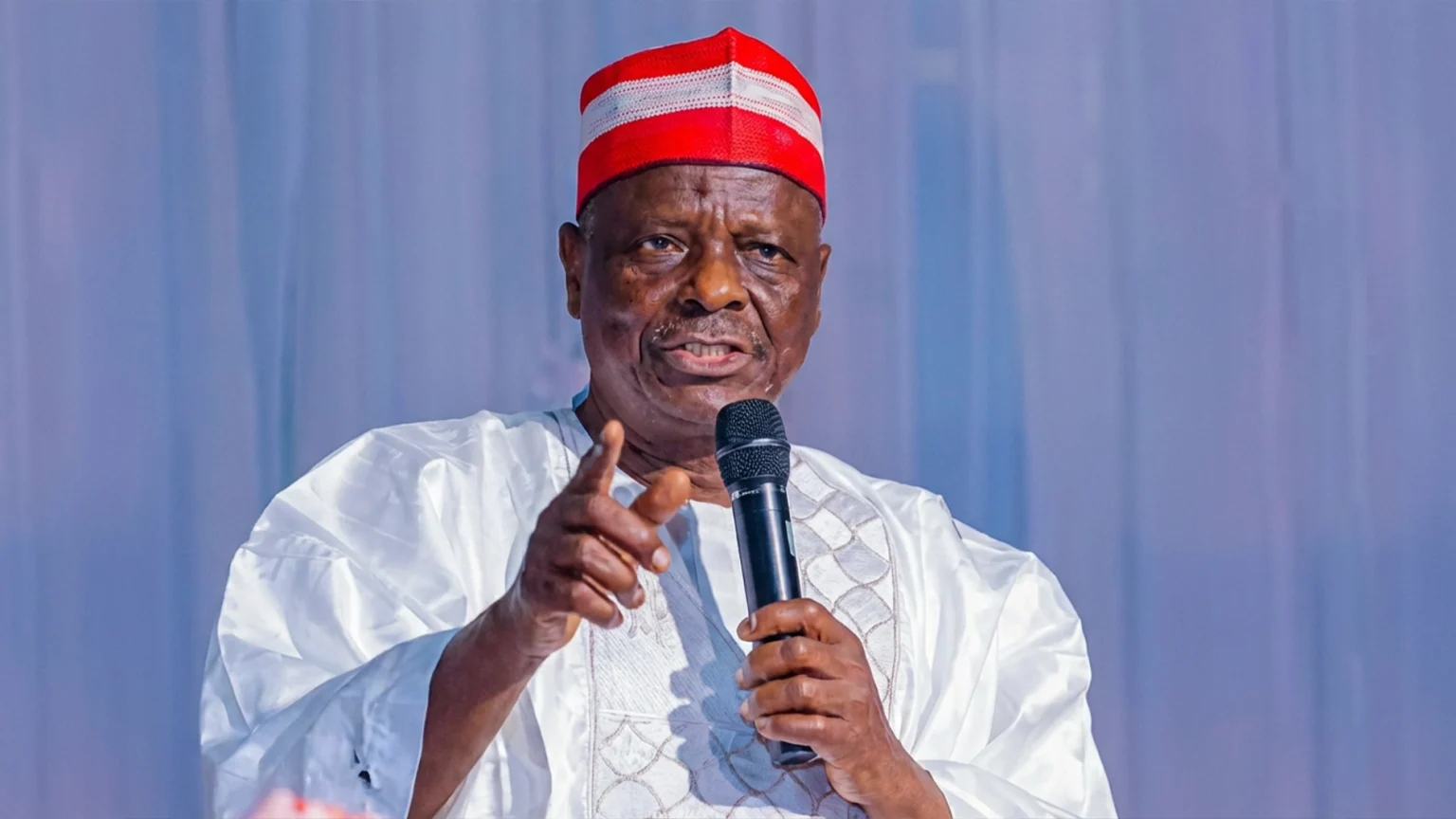

Vice Presidential candidate of the Nigeria Democratic Congress (NDC) in the 2027 election, Senator Rabiu Kwankwaso, has said the outcome of the Osun governorship election has once again demonstrated that political power ultimately belongs to the electorate.
Kwankwaso, a former Kano State governor and leader of the Kwankwasiyya movement, congratulated Governor Ademola Adeleke on his victory, while applauding the people of Osun State for what he described as a decisive exercise of their democratic mandate.
In a statement posted on his verified Facebook account on Sunday, Kwankwaso said the election reinforced the principle that voters must remain at the heart of Nigeria’s democratic process.

“As a leader of the opposition and a committed democrat, I commend the people of Osun State for exercising their democratic rights and reaffirming the power of the people’s mandate,” he said.
According to him, Adeleke’s victory was a reminder that citizens who participate actively in elections can make their voices heard and determine who governs them.
“This victory is a reminder that when citizens remain committed to their civic responsibilities and make their voices heard, the people’s will must prevail,” he said.
Kwankwaso also commended the Independent National Electoral Commission (INEC) for the conduct of the election, urging all political actors and other stakeholders to protect the credibility of future elections.
“I also commend the Independent National Electoral Commission (INEC) for the conduct of the election and encourage all stakeholders to continue to uphold the principles of credible, peaceful and transparent elections,” he added.
INEC declared Adeleke, the Accord Party candidate, winner after he polled 511,067 votes, defeating the All Progressives Congress (APC) candidate, Oyebamiji, who secured 444,815 votes.
Adeleke won 19 of Osun’s 30 local government areas, while Oyebamiji prevailed in 11.
The African Democratic Congress (ADC) candidate, Najeem Salaam, came third with 17,180 votes.
Kwankwaso’s reaction places the Osun result in a broader democratic context, portraying the election as evidence that electoral victories are ultimately determined by voters when citizens turn out to exercise their mandate.