

By Douglas Baye-Osagie
dbayeosagie@yahoo.com
In Nigeria, a name alone is never enough. We dress it up, pad it, crown it. _His Excellency, His Imperial and Royal Majesty, Your Highness and Highnesses, Dr, High Chief, Double Chief, Triple Chief, Senior Apostle, Deacon, Elder, Mallam, Alhaji, Engr, Surveyor, Barrister, Pharmacist, The Most Distinguished, Honourable, Comrade_ — these are not just prefixes. They are keys. They are invitations to the front row.
We are a people sociologically wired to chase titles because titles mean access. In a society where people almost worship money and the good things of life, your prefix and appellations announce you before you speak. It tells the gatekeeper to open the door, tells the room to stand up, tells the world “this person matters.” To be called by just your name here feels like being stripped naked. That is why we collect titles the way others build character — not only for what we have done, but for what we want people to believe we are.

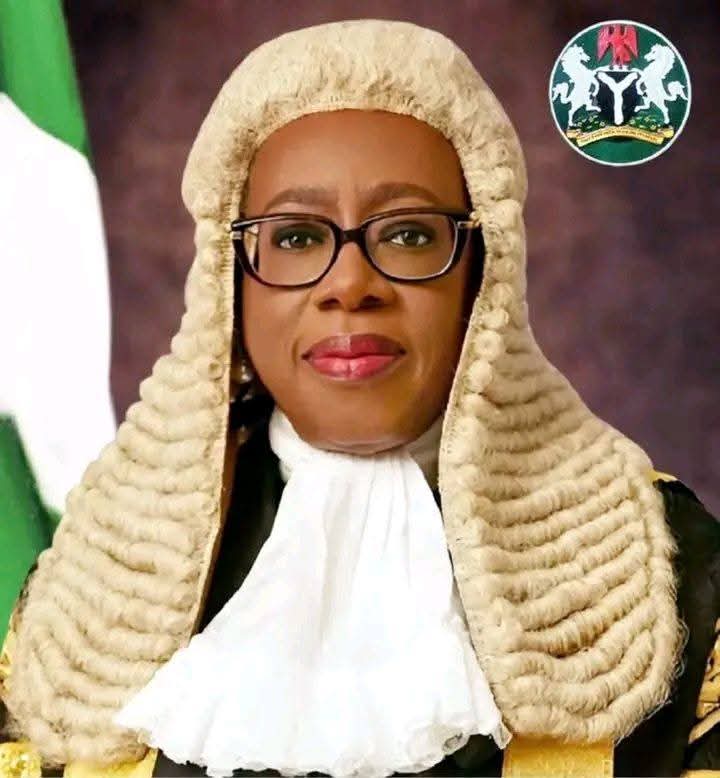
It is against this backdrop that on July 31st, 2026, the Chief Justice of Nigeria, Kudirat Kekere-Ekun, issued a directive that has since set the legal community talking. Through a memorandum signed by the Chief Registrar of the Supreme Court, Kabir Akanbi on July 13th 2026, the CJN ordered all legal practitioners to stop using the title “Barrister” as a prefix to their names in official engagements.
The memo was clear and without ambiguity. It was addressed to litigation staff, court registrars, lawyers and all officers of the court. The reason given was simple: the use of “Barrister” as a prefix is “inappropriate and inconsistent with the standards of professionalism expected within the Supreme Court of Nigeria.”
With immediate effect, lawyers were told to drop “Barrister” from correspondence, court records, documents, identity cards and every other official interaction. Heads of departments were also instructed to enforce compliance. For a profession that prides itself on precedent, the CJN was setting a new one.
The directive sparked debate almost instantly. Some welcomed it as a move toward global best practice. Others saw it as an attack on identity. On social media, in chambers, and in court corridors, the question was the same: why now, and why “Barrister”?
The truth is, Nigeria may be the only country in the world where lawyers routinely prefix their names with “Barrister.” In the UK, the US, Canada, or Ghana, lawyers simply use “Esq.” or no prefix at all. The title “Barrister” is a description of call to the Bar, not a prefix for daily use.
Yet in Nigeria, “Barrister” has become more than a professional label. It has become a status symbol. Even lawyers who have never argued a case or done anything legal with their Law certificate insist on being addressed as “Barrister So-So.”
This is where the CJN’s directive collides with a deeper Nigerian reality. In Nigeria, titles are currency. They confer respect, open doors, and sometimes even determine whether you are taken seriously in a meeting.
Look around and you will see the same pattern. Honorary doctorates are bought and added to names so people can be called “Dr.” Professionals who pass one qualifying exam immediately append “CFA,” “CPA,” “MNIM” to everything. The longer the string after your name, the more important you appear.
The church is not left out. We now have “Most Senior Apostle,” “Prophet General,” “Papa,” “Daddy G.O.” Titles multiply. People will walk out of meetings if they are not addressed with the full, correct appendage. Ego, not service, often drives it.
Politics is perhaps the worst arena. “Right Honourable” is constitutionally reserved for Speakers and Deputy Speakers of legislative houses. Yet it is fashionable for any lawmaker, and sometimes even aides, to adopt “Rt. Hon.” and invent a justification about “ranking members.” The title culture has even trickled down to campuses. Students elected into University Student Parliaments now prefix their names with “Honourable” and “Senator,” as if they were sitting in the National Assembly.
We saw this same obsession on display a few years ago on a popular breakfast morning show on TV. A broadcaster fumed like a baby because his younger colleague called him by his first name on air. He had to ask her, “Were you at my naming ceremony?” — forgetting that in live broadcasting, the ethics and norm is to use first names with colleagues. It’s trite knowledge, but ego wouldn’t allow it.
Religion hasn’t escaped it either. “Alhaji” and “Alhaja” strictly mean someone who has completed Hajj to Mecca. It is a religious title earned through a spiritual journey. But in Nigeria, it’s a well-used prefix for respect, age, and wealth. You’ll find business cards, signboards, and political posters full of “Alhaji This” and “Alhaja That.” Many who have never stepped foot in Saudi Arabia still answer to “Alhaji” because it signals status. A 30-year-old businessman would rather be called Alhaji than his first name.
Traditional titles are also commercialized. Chieftaincy titles are sold to the highest bidder. Gone are the days when being called a Chief meant wisdom, honour and a repository of the rich culture and history of a people. Successful armed robbers and men of questionable character with the means buy them. Academic titles are faked. And in the legal profession, “Barrister” became the easiest and most accessible title to wear, because every lawyer is called to the Bar.
And the retired ones don’t lose their titles either. You must address the military officer, judge, or serviceman with their titles or else you might not get their attention.
So the CJN’s memo was not just about grammar or protocol. It was a direct challenge to a culture of “big manism” and self-elevation that has crept into every profession. It asked lawyers to return to substance over prefix.
But is that the most urgent problem in our judiciary? That is the counter-argument many lawyers are making. They agree that professionalism matters, but they ask: what about the bigger issues? Is the Judiciary still the last hope of the common man?
The 2027 political season is upon us and we will need an impartial Judiciary to keep the system sane from criminally minded politicians who can confidently go against the law to grab state power. We need a fearless bench to ensure every letter of the electoral act is interpreted without compromise.
Courts of coordinate jurisdiction now give conflicting judgments on the same subject matter. Forum shopping is rampant. Two politicians are having quarrels over political party structures in the Niger Delta and before the next afternoon, a court in Sokoto has handed judgment. Judges are sometimes used as instruments in political battles. Case backlogs stretch for years. The common man still struggles to access justice.
For many observers, that is where the CJN’s energy should be focused. A legacy built on judicial reforms, consistent jurisprudence, and restoring public confidence in the courts would outlast any memo about titles.
To be fair, professionalism is not trivial. How we present ourselves reflects how seriously we take our work. If the Supreme Court wants uniformity and global alignment, then standardizing forms of address is a legitimate place to start.
The CJN is not saying lawyers should stop being called to the Bar. She is simply saying: on official records, let your name stand on its merit, not on a prefix. “Kabir Akanbi, Esq.” not “Barrister Kabir Akanbi.”
Still, enforcement will be difficult. Culture does not change by memo. As long as Nigerians equate titles with importance, people will find new ways to signal status, with or without “Barrister.” We will simply move from “Barrister” to “Dr” to “Chief” to “Alhaji.”
I remember tearing up a speech an hour before an event because the principal’s national honor was omitted beside his name. That is how deeply we are wired to titles. Dropping “Barrister” will feel, to many, like dropping a part of their identity.
In the end, the CJN means well. Professional standards matter. But Nigerians will judge the judiciary less by what lawyers call themselves, and more by whether justice is timely, fair, and equal. If Justice Kekere-Ekun can tackle both the prefix and the problems behind it, then that will be a legacy worthy of the office of Chief Justice of Nigeria.